Glass bottle deposit scheme in France
The deposit system for glass bottles in France: how can brands prepare for the return of reuse?
The deposit system for glass bottles in France is once again becoming part of packaging strategies, but it is not simply a matter of asking consumers to return an empty bottle. For a brand, it involves a more robust container, return logistics, controlled washing, a sufficient return rate, and a closure system that is consistent with reuse.
This shift is relevant for producers, breweries, bottlers, distributors, and food brands that already use glass or want to reduce their dependence on single-use packaging. The deposit system can strengthen a product’s image, but only if it is based on a genuinely organized loop.
The challenge, therefore, is not to treat the deposit system as a simple environmental argument. It is necessary to understand what it changes in terms of bottle design, closure choice, return flows, and customer experience.
What does a deposit system for a glass bottle mean?
The deposit system organizes the return, while reuse extends the bottle’s life
The deposit system is based on a simple mechanism. The customer pays an amount linked to the container, then gets it back or has it credited when they return the bottle through the planned collection channel. This amount is used to encourage the return.
However, the deposit system is not exactly the same as reuse. It creates the conditions for the return, while reuse refers to the actual reuse of the bottle after washing, inspection, and refilling. Without this loop being properly organized, the deposit system loses much of its value.
Recycling recovers the material, while the deposit system preserves the container
With recycling, the bottle is collected, crushed, and then melted down to produce new packaging. The material remains useful, but the original container disappears. With a deposit system, the bottle keeps its function and can circulate several times before being sent for recycling at the end of its life.
For professionals, this distinction changes the specifications. A bottle intended for a deposit system must withstand transport, handling, washing cycles, quality checks, and refilling. It must be designed as a durable object.
Where does the deposit system for glass bottles in France stand?
A requirement that has not yet been widely generalized
The deposit system for glass bottles is not yet generally mandatory for all sales to private consumers in France. There is no single national system in which every glass bottle would automatically be subject to a deposit and returnable at all points of sale.
However, the regulatory framework and reuse objectives encourage companies placing products on the market to anticipate future changes. A bottle launched today may remain in a product range for several years. If it is too fragile, too specific or difficult to wash, it could complicate future integration into a return system.
A gradual return through pilot schemes and professional networks
The deposit system remains present in certain professional channels, particularly cafés, hotels, restaurants, breweries and networks where return flows are easier to organize. It is also developing through local initiatives and mass-market trials.
This transition phase makes it possible to test return rates, collection points, storage constraints, washing centers and consumer understanding. The deposit system does not depend only on the container. It also depends on a reliable logistics network.
Why is the deposit system returning to packaging strategies?
Reducing the impact of the container when rotations are sufficient
Glass is recyclable, but its production and remelting require energy. When the same bottle can be used several times, the deposit system can reduce some of the impacts linked to the repeated manufacture of new containers. This advantage depends on the number of rotations, washing, the return rate and the distances traveled.
This is why the deposit system must be assessed in practical terms. A local system with good return rates, nearby washing facilities and compatible formats may be more coherent than a loop spread over long distances.
Turning the container into proof of commitment
For brands, the deposit system makes their commitment more tangible. A bottle that is returned, washed and put back into circulation shows that the packaging is not only recyclable in theory. It remains useful within an organized loop.
This proof can strengthen trust, provided that the system is clear. If consumers do not know where to return the bottle, or if actual reuse is not guaranteed, the promise becomes fragile.
Which glass bottles are compatible with the deposit scheme?
Durability, washing, and standardization
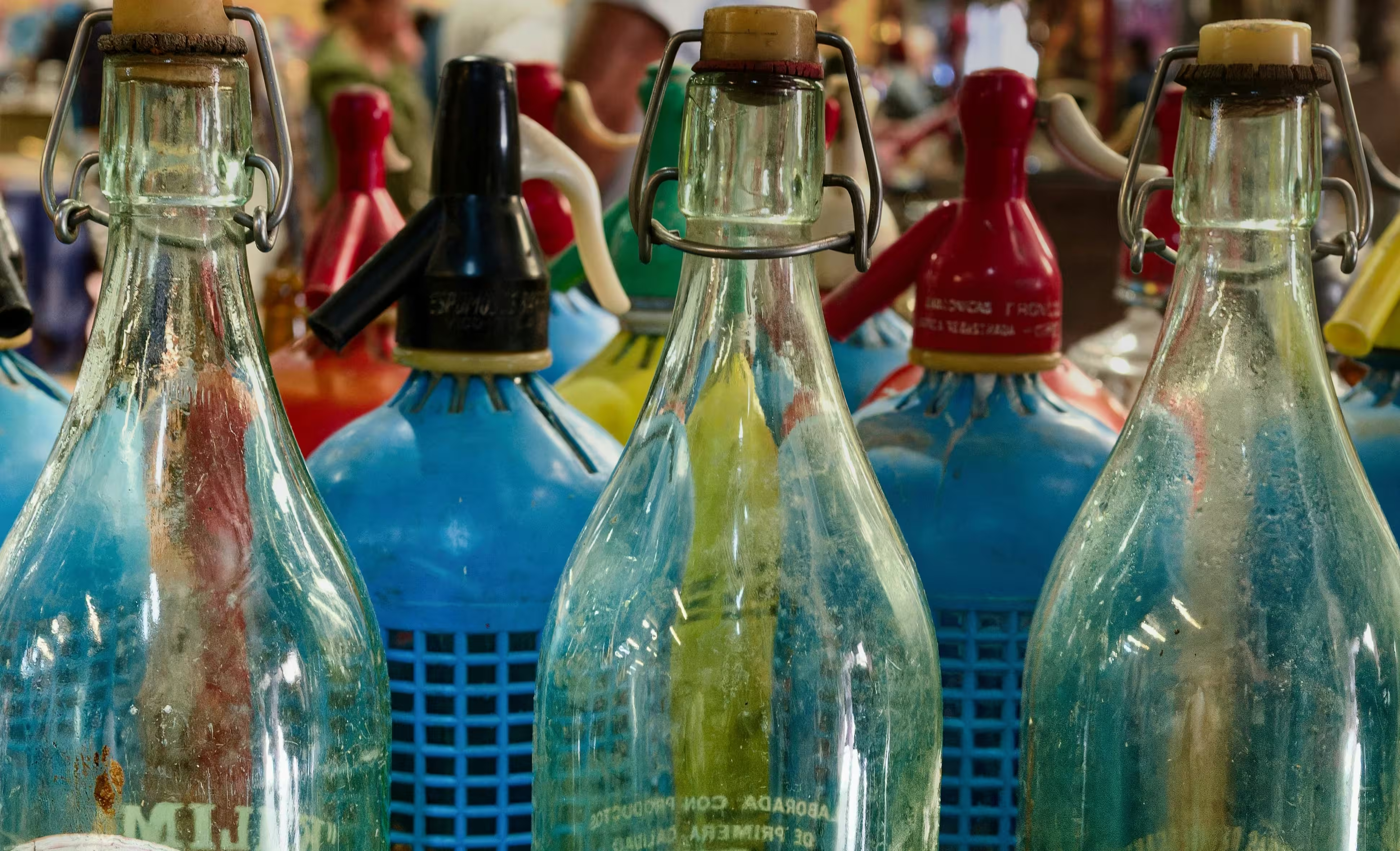
Not all glass bottles are suitable for the deposit scheme. A returnable bottle must withstand repeated handling, storage, transport, washing, and inspection before reuse.
Standardization is also becoming important. Overly specific formats complicate sorting, storage, the mass collection of returns, and the organization of washing. A bottle can remain distinctive, but its differentiation must not hinder its circulation within the reuse loop.
Labels, embossed features, and accessories must remain compatible with the loop
The shape, embossed features, labels, adhesives, and accessories can either facilitate or complicate washing. In a deposit scheme project, aesthetics must therefore be designed with operational requirements in mind.
A very distinctive bottle might attract attention on the shelf, but it becomes less practical if it retains residues, slows down sorting, or requires isolated processing. The perceived quality must remain compatible with repeated cycles.
Why does the cap matter in a deposit scheme project?
The mechanical stopper supports re-sealing and reuse
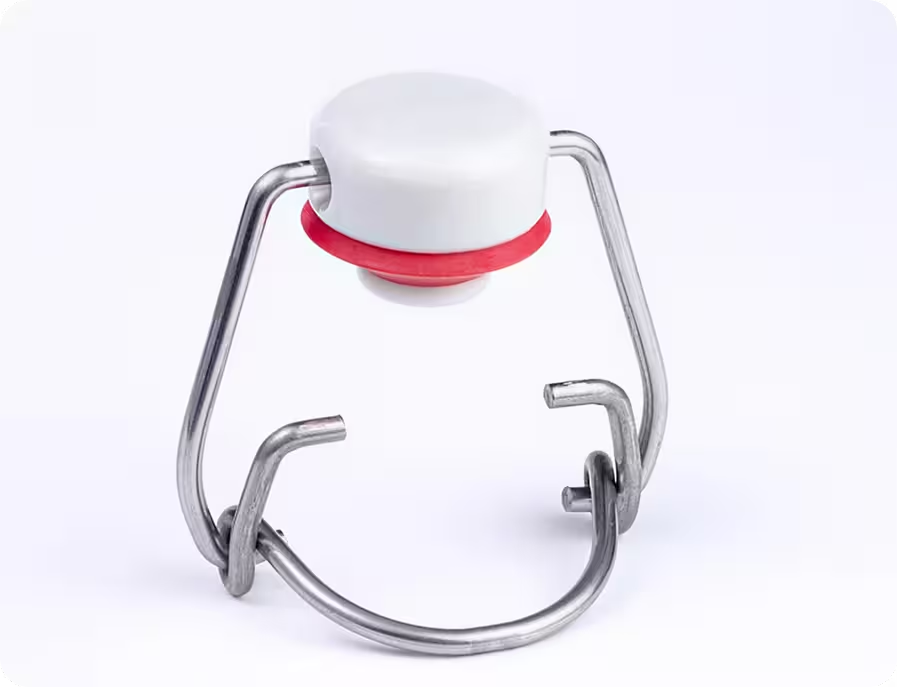
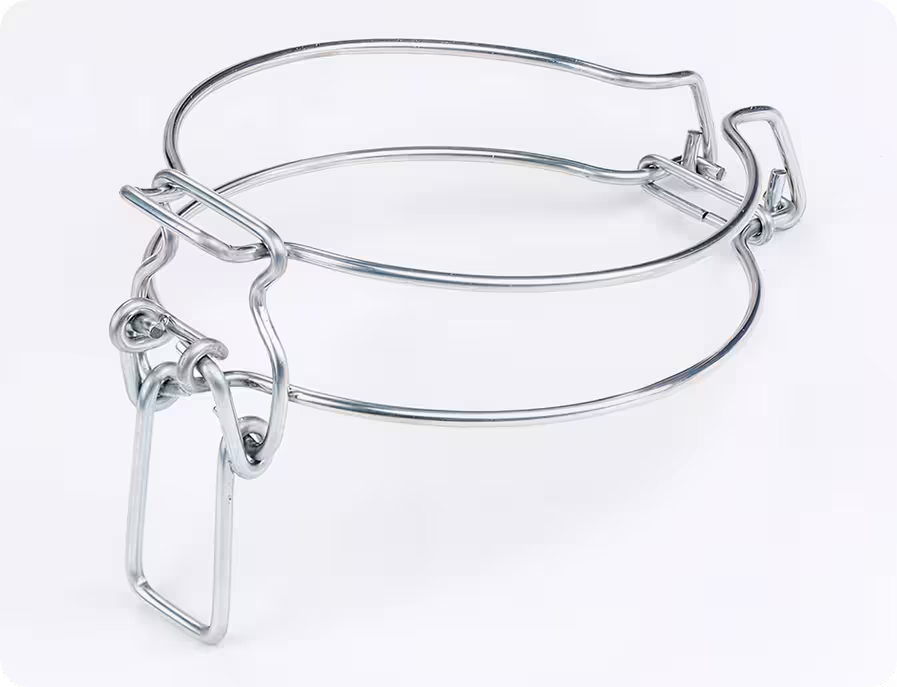
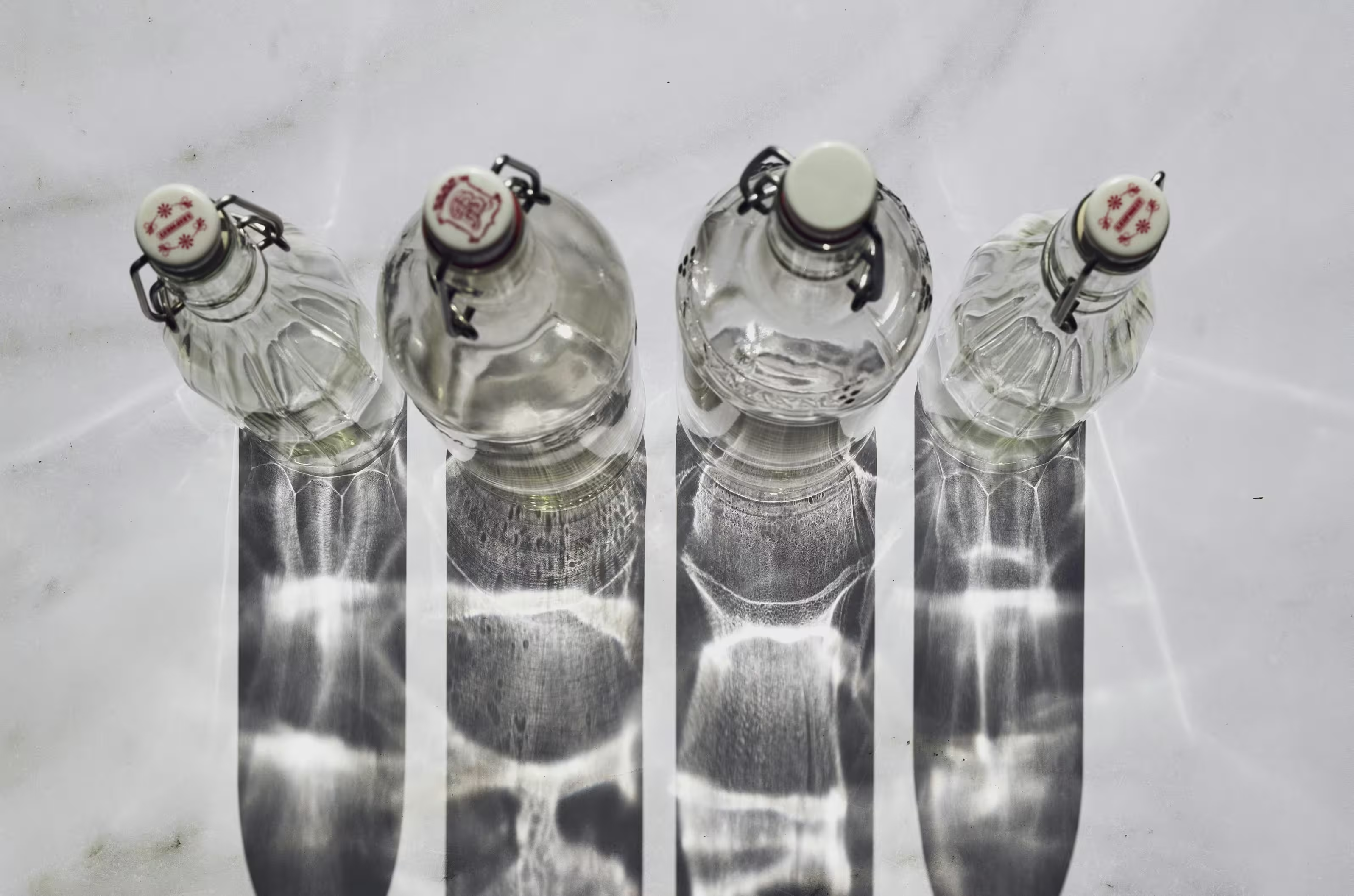
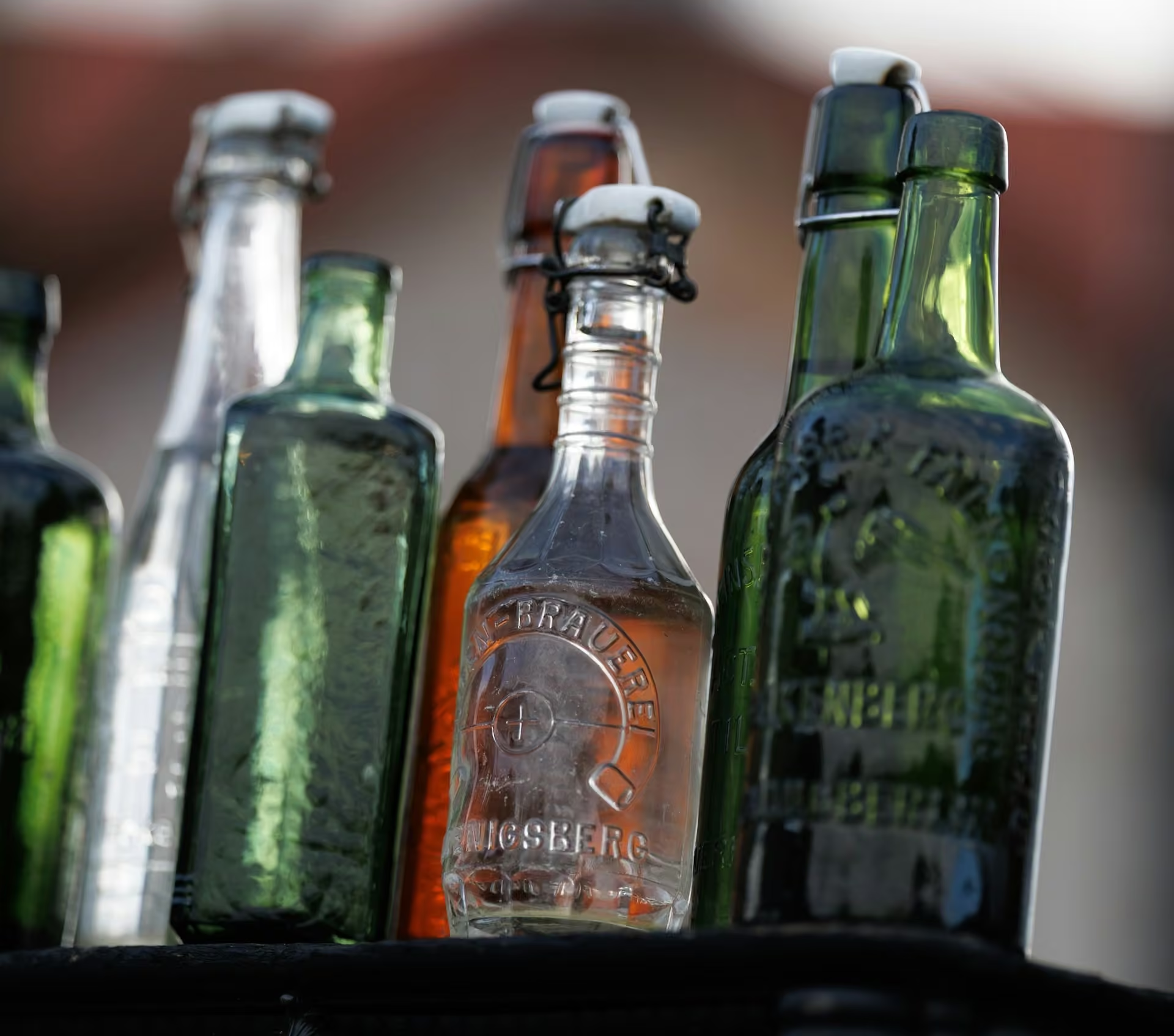
The stopper is not just an accessory. It protects the product, defines the opening experience, and contributes to the bottle's image. In a deposit system project, the mechanical stopper for glass bottles is of particular interest, as it naturally suggests robustness, re-sealing, and repeated use.
However, its role must be technically validated. The seal, frame, neck, and closure integrity must remain consistent with the product, handling, and any washing constraints. [SEG 10]
In some cases, a mechanical stopper will be the best choice. In others, a cap, a cork, a metal closure, or a technical solution might be more appropriate.
The article on alternatives to plastic stoppers allows for comparison of these options based on use, the material and brand perception. The closure must therefore be chosen in conjunction with the bottle. An effective returnable system relies on a coherent set of elements: container, neck, cap, label, washing, transport, and customer return.
Pilot a territory before scaling up
For a brand, the transition can begin with a limited scope. A pilot territory, a limited product range, or a controlled distribution network allows for observation of feedback, costs, logistical disruptions, and customer reactions.
This gradual approach avoids abruptly overhauling the entire organization. It allows for adjustments to the bottle, closure, label, collection points, and messaging before a broader rollout.
Anticipate volumes, returns, and customer engagement
The effectiveness of a deposit system depends on the return rate. A bottle that isn't returned cannot be washed or refilled. The deposit amount helps, but it's not sufficient. The act must be simple, understood, and integrated into purchasing habits.
Brands must therefore anticipate volumes, return locations, signage, storage of empty bottles, relationships with distributors, and customer education. The deposit system succeeds when the process is seamless.
Why work with Edard for a returnable bottle project?
Edard supports professionals who want to design a glass bottle and a closure that is consistent with their product, brand image, and practical constraints. In the context of a return to reuse, this holistic approach avoids selecting the container and stopper separately.
The goal is to identify a reliable, appealing solution that is compatible with packaging requirements. The choice of a mechanical stopper, when appropriate, can enhance perceived quality and support a reuse strategy.
Preparing a product range for a deposit-return scheme requires precise decisions: glass robustness, neck type, closure, customization, washing, transport, and understanding of the end customer. These choices must be anticipated before market launch.
To explore a project related to glass bottle deposit-return in France or to adapt an existing product range for reuse, contact Edard to evaluate the most suitable closure and packaging solution.

Vous souhaitez discuter de votre projet

Continuer la lecture
Verres soufflés, histoire et techniques d'un savoir-faire millénaire
Contact our team