
Alternatives to plastic caps

What alternatives to plastic caps should you choose for your glass bottles?
Choosing alternatives to plastic caps isn't just about replacing one material with another. For a brand, producer, or bottler, the closure influences sealing, preservation, capping speed, the opening experience, and the bottle's end-of-life.
The challenge is therefore as much technical as it is marketing. A cap might seem more sustainable on paper, but become less relevant if it complicates washing, slows down the production line, or weakens the perceived quality of the product. The right choice depends on the container, the distribution channel, the targeted reuse level, and brand positioning.
This article compares the main alternatives to plastic caps to help professionals choose a closure that aligns with their glass bottles.
Why look for alternatives to plastic caps?
Reducing plastic dependency without compromising closure performance
Plastic caps remain lightweight, economical, and easy to mass-produce. They therefore retain their appeal in certain sectors. However, they become less appropriate when a brand wants to limit its reliance on plastic materials, improve the environmental transparency of its packaging, or enhance the perceived value of a glass bottle.
Even when a plastic cap is recyclable, its performance depends on collection, sorting, the actual available recycling stream, and the end-user's behavior. For a glass bottle designed for durability, the closure must therefore be evaluated based on its entire use logic, not solely on its material.
Aligning the cap with the bottle's image and use
An artisanal lemonade bottle, a local beer, a premium oil, or a spirit do not tell the same story to the consumer. The cap contributes to this perception. It can reinforce an image of tradition, robustness, naturalness, practicality, or controlled industrial manufacturing.
The right alternative to plastic caps is the one that supports the product's actual use. A closure intended to be opened only once does not meet the same criteria as a cap designed for multiple reclosures or for a bottle part of a reuse loop.
Why the swing-top cap remains a coherent alternative for glass?
A reusable closure adapted for repeated actions
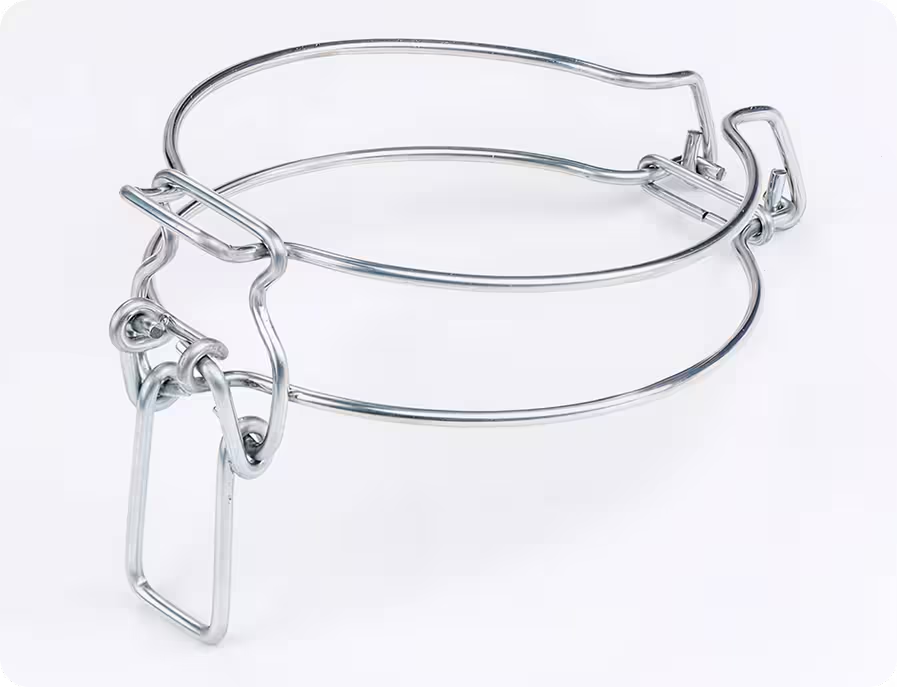
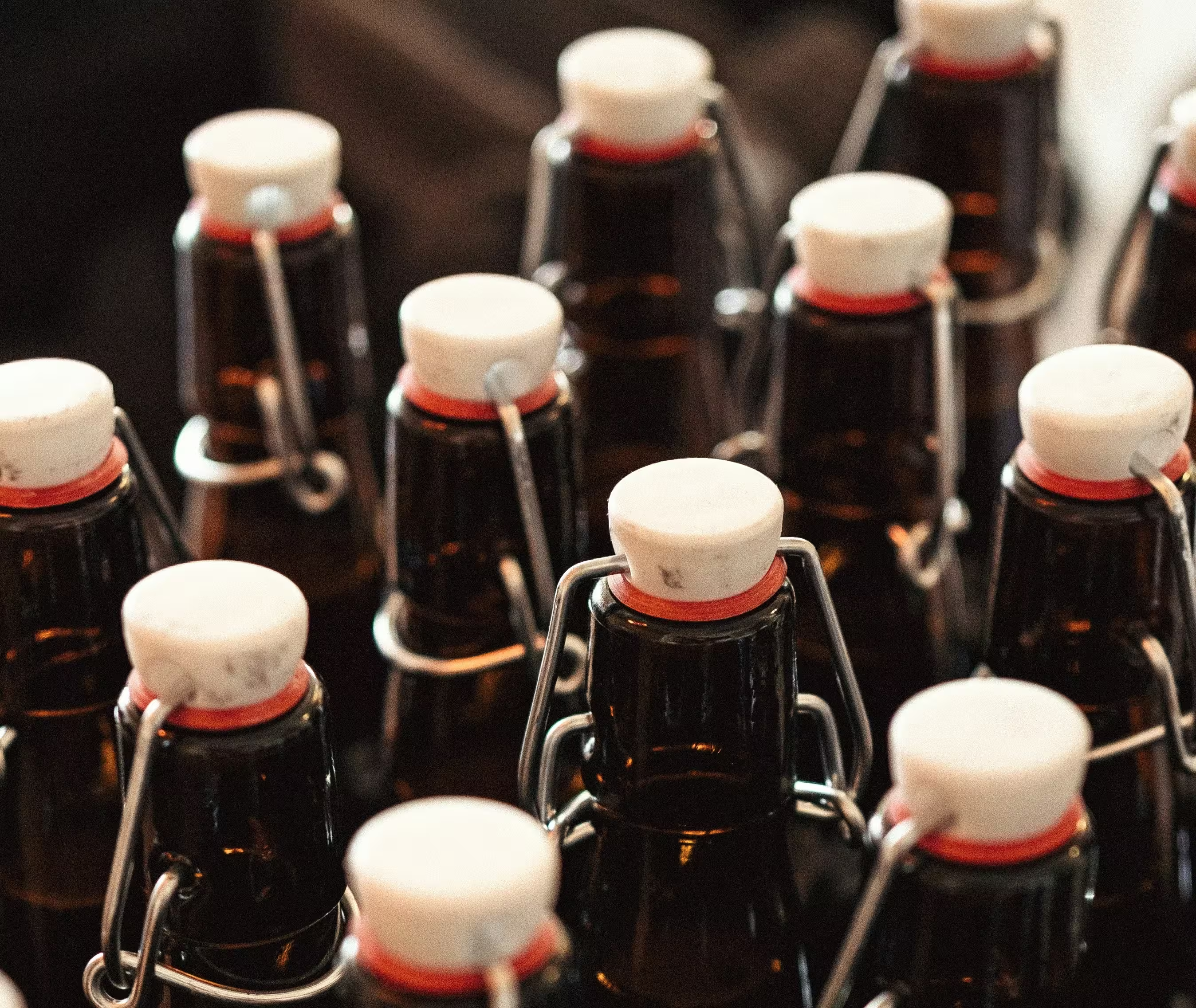
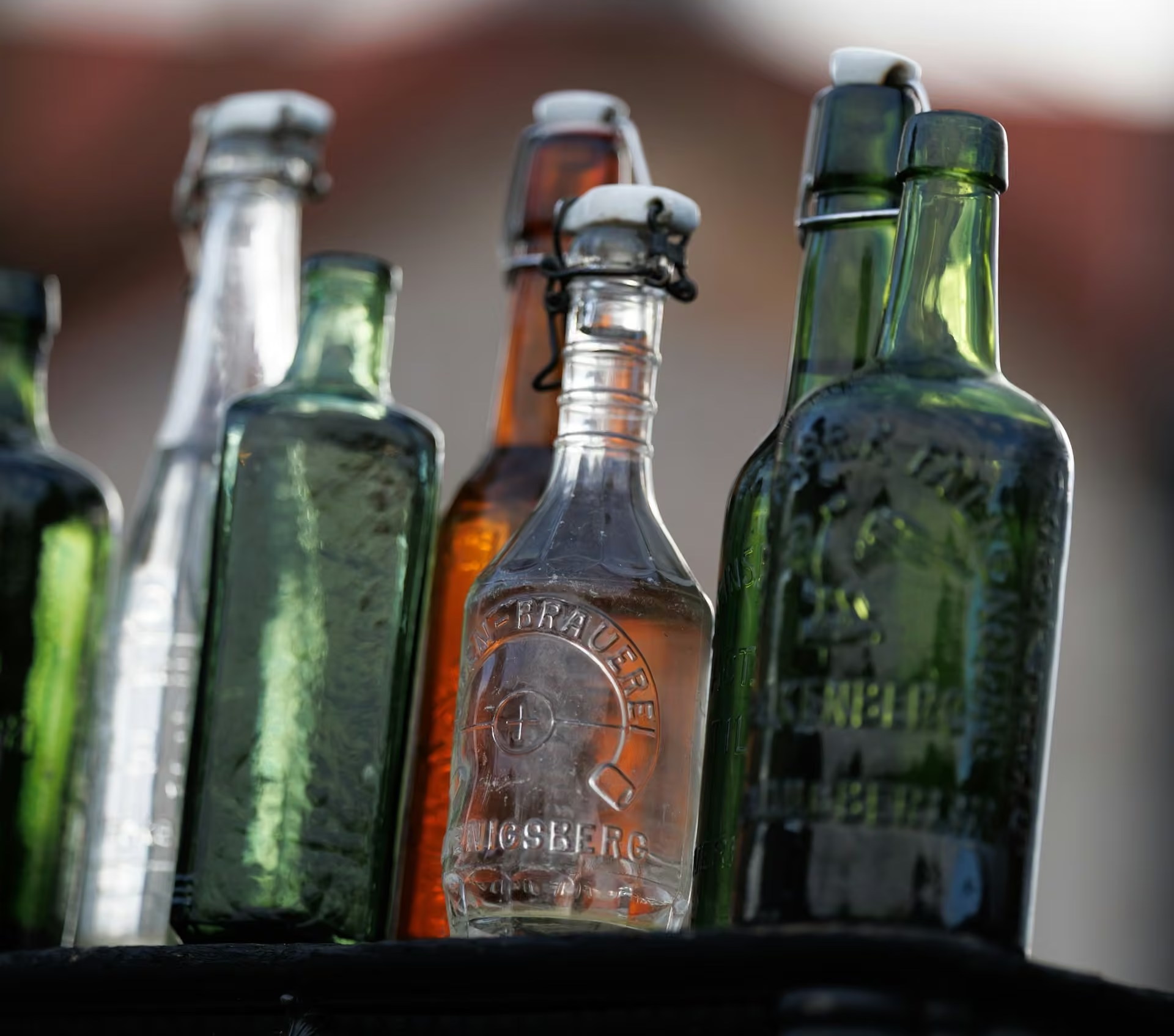
The swing-top cap is one of the alternatives to plastic caps the most relevant for glass bottles. Its system combines a cap, a seal, and a metal frame that allow the bottle to be opened and reclosed multiple times, without any additional accessories.
This approach is particularly suitable for beverages and products that are not always consumed in a single sitting: lemonades, craft beers, juices, syrups, vinegars, oils, or food preparations. The closure remains clear, robust, and directly associated with sustainable use.
A quality marker on the shelf
Beyond its function, the swing-top stopper adds character to the container. It evokes tradition, reliability, and the care taken in packaging. This is also why swing-top stoppers remain widely used by brands that want to turn the closure into a distinctive feature.
This strong image doesn't negate the need for technical validation. Compatibility with the neck, the seal, handling, potential washing, and the product's sealing requirements must be checked. The swing-top stopper is relevant when integrated into a comprehensive consideration of the container.
What other alternatives to plastic stoppers should be compared?
Cork for traditional and premium markets
Cork maintains a strong presence in wine, certain spirits, oils, and gourmet products. It conveys a natural, artisanal, and high-quality image. It works particularly well when the opening is part of the consumption ritual.
However, it is not suitable for all uses. A cork closure may be less practical if the product needs to be reclosed frequently, handled quickly or subjected to repeated sealing demands. Its selection should therefore align with a positioning strategy, not merely a desire to move away from plastic.
Metal and screw caps for industrial constraints
Metal stoppers, caps, and screw caps can meet needs for robustness, customization, and industrial production rates. They offer a consistent closure and can enhance a technical or premium image depending on the finishes.
However, these solutions require adapted equipment, a compatible neck, and precise controls. A screw cap or metal closure can be very effective, but it becomes less appealing if its adoption necessitates disproportionate adaptations to the packaging line.
Bio-based closures for a transition that needs careful management
Bio-based closures can sometimes reduce the proportion of fossil-based material without completely altering the ergonomics of a plastic closure. They can offer a transitional path for certain product ranges.
Their benefits must still be analyzed with caution. Bio-based does not automatically mean biodegradable, compostable, or better recycled. A brand must verify sealing, food safety, industrial compatibility, and actual end-of-life before using it as an environmental argument.

How to choose an alternative based on the bottle type?
Craft beverages, beers, lemonades, and juices
For craft beverages packaged in glass, the swing-top closure is often a good fit. It pairs well with products that have a strong identity, reusable bottles, and applications where re-sealing offers a tangible benefit to the consumer.
Its advantage is even more pronounced when the brand wants to highlight the container's durability without compromising perceived quality. The act of opening then becomes an integral part of the product experience.
Wines, spirits, oils, and gourmet products
For wine, the choice depends on shelf life, the target market, and the price point. Cork remains highly traditional, while the screw cap addresses concerns of practicality and consistency. For spirits, oils, and gourmet products, the closure must primarily support the perceived quality.
Metal, cork, swing-top stoppers, or a technical closure can be considered depending on the format and the desired experience. In these categories, replacing plastic is as much about performance as it is about brand building.
Returnable or reusable bottles
For a bottle intended for return, washing, and multiple rotations, the closure must be an integral part of the system. It must withstand handling, remain understandable to the customer, and maintain consistent sealing. To learn more, we have detailed here the lifecycle of a returnable bottle, which requires considering the container, the cap, and logistics together.
What mistakes to avoid before replacing a plastic cap?
Confusing a more natural material with a more sustainable solution
The first mistake is choosing an alternative simply because it seems more ecological, without verifying its actual effectiveness. A natural, recycled, or bio-sourced material might be unsuitable for the product, transport, washing, or the expected level of sealing.
A sustainable solution must be consistent with the entire packaging system. It must close properly, preserve the product, remain available, integrate into the production line, and be clearly explained to the end customer.
Forgetting the production line, washing, and logistics
An alternative that performs well for a small batch can become problematic at a large scale. Unstable supply, slow application, high unit cost, or imperfect compatibility with the bottle neck can jeopardize the project.
The cap should never be separated from the bottle. The neck, glass, seal, label, storage, transport, and washing all form a system. Therefore, modifying the closure requires a comprehensive understanding of all constraints.
How does Edard help choose an alternative to plastic caps?
Edard assists professionals in selecting closures tailored to their products, bottles, and distribution model. The goal isn't to simply replace a plastic cap by default, but to build a solution that is consistent with the final use.
Depending on the project, this consideration might lead to a mechanical stopper, a custom closure, or a more specific solution. The decision-making process considers sealing, production speed, shelf appeal, washing constraints, and the desired level of customization.
A credible alternative must be able to be produced, applied, transported, and used under optimal conditions. This industrialization logic is what differentiates a good idea from a truly viable closure.
To explore the most suitable alternatives to plastic caps for your glass bottle, contact the Edard team and outline the constraints of your product, production line, and distribution channel.

Vous souhaitez discuter de votre projet

Continuer la lecture
Verres soufflés, histoire et techniques d'un savoir-faire millénaire
Contact our team