Which swing-top stopper should you choose for your bottle neck?
How do you choose a swing-top stopper that fits your bottle neck? Two bottles with the same capacity and the same opening diameter can require different closures. Which neck details make the difference, and how can you check stopper compatibility before ordering?
Which swing-top stopper should you choose for a bottle neck with or without holes?
| Bottle neck | Closure to consider | What to check before ordering |
|---|---|---|
| Neck with two side holes | Swing-top stopper with a wire bail, anchored directly in the holes | Hole position, height below the neck rim and gasket seating |
| Neck without holes, with a profile that allows anchoring | Lever-action stopper with a suitable retaining ring. At Edard, this solution is used as a secondary closure. | Neck profile and outer diameter where the ring is fitted |
| Neck whose reference or profile is unknown | Bottle identification or a trial on samples before choosing | Anchoring geometry, head centering and gasket compression |
A neck with holes for a wire-bail swing-top stopper
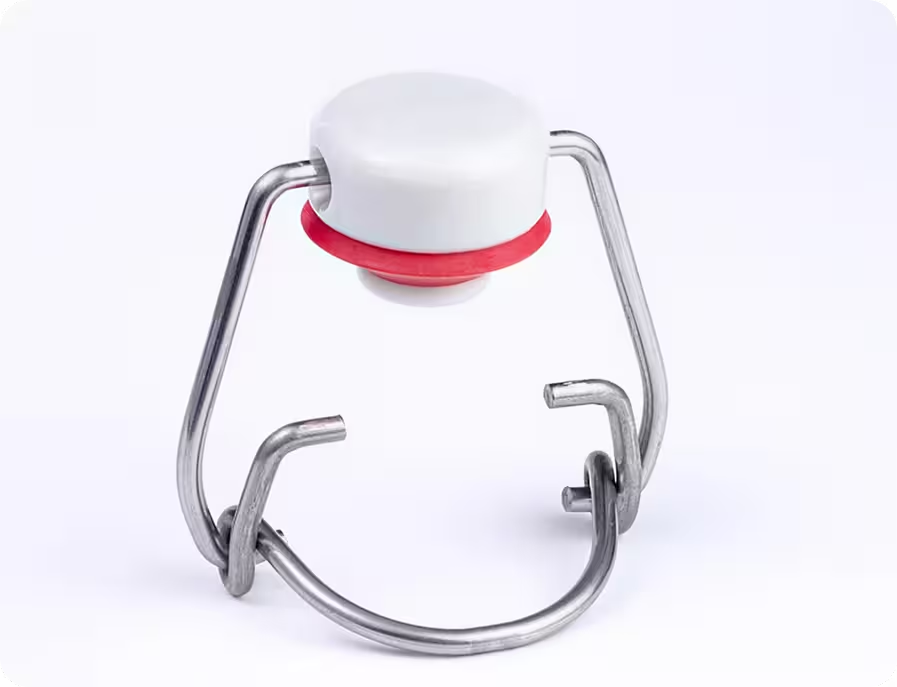
On a bottle with a perforated neck, the two ends of the metal frame, called prongs, fit into the side holes. When the lever is lowered, the bail pulls the stopper head toward the bottle neck and compresses the gasket against the glass. The position of the holes therefore determines both where the head sits and how much the gasket is compressed once the lever is closed.
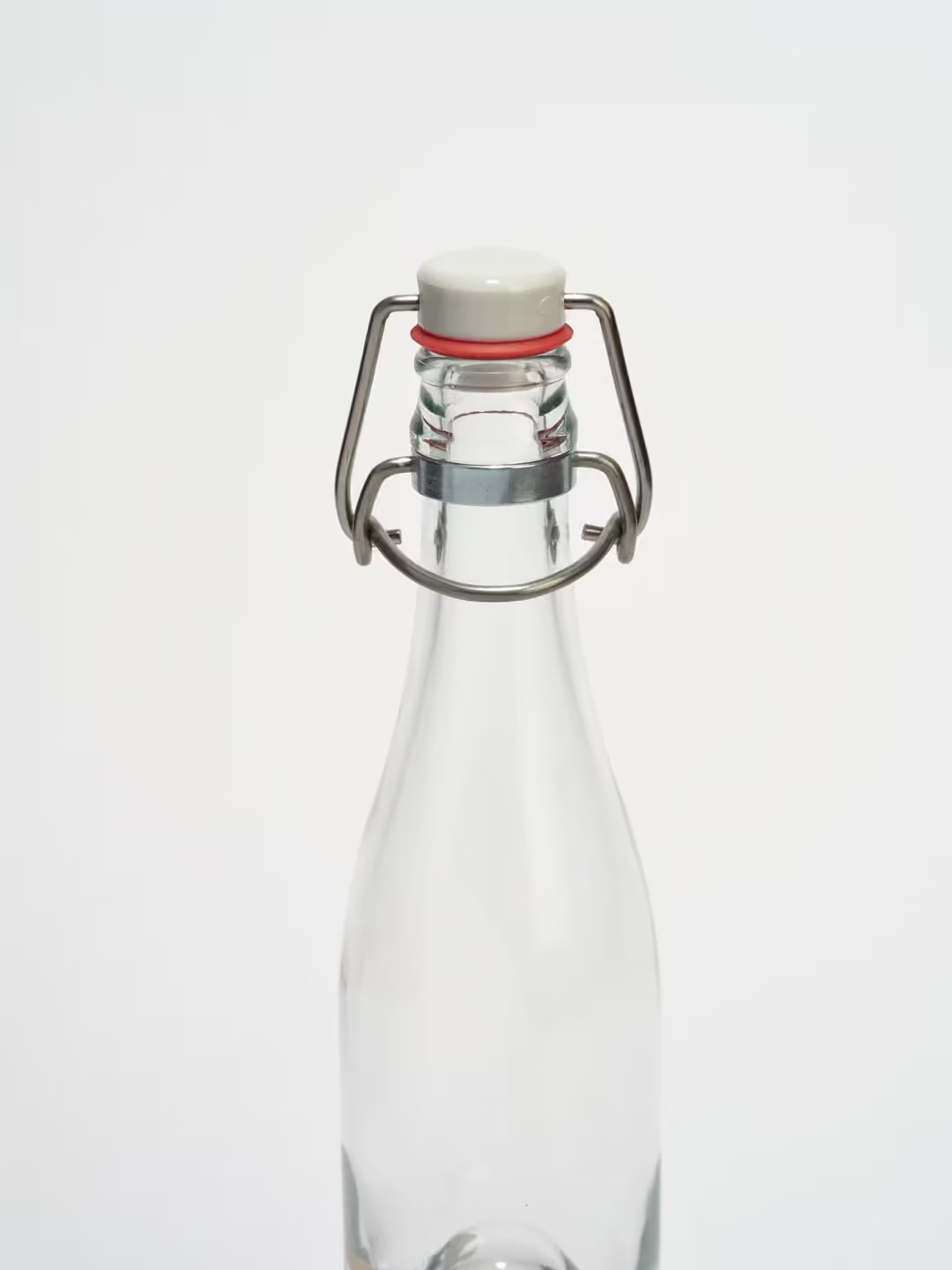
This assembly is generally offered as a primary closure, meaning the closure that seals the bottle at the time of packaging. To choose the bail, check that its prongs engage symmetrically in the holes and that the head naturally sits in line with the opening. If you have to spread or bend the frame to fit it, check the stopper reference before going any further.
A neck without holes for a lever-action stopper with a retaining ring
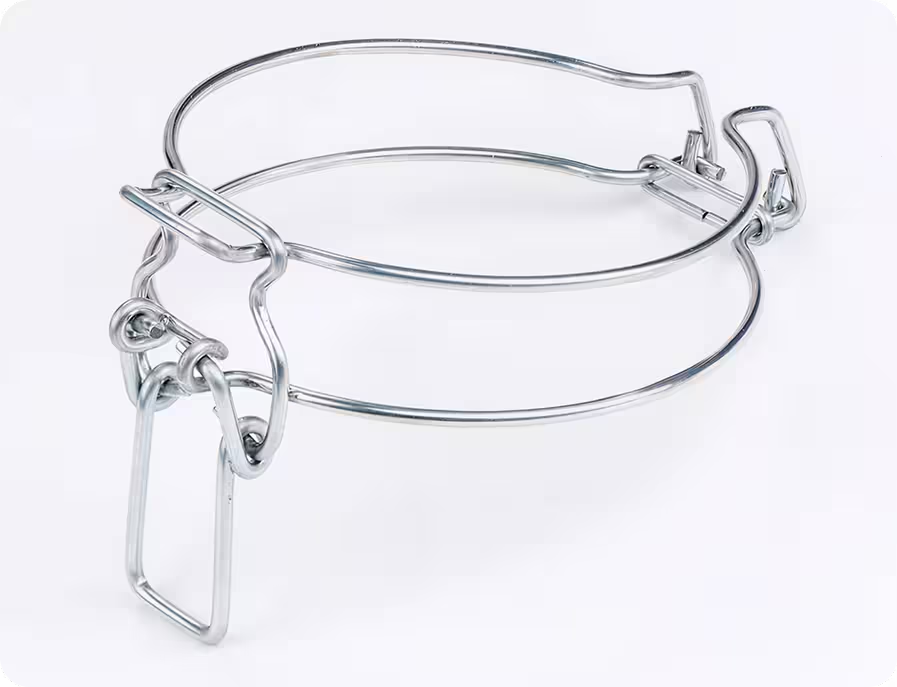
On a neck without holes, the retaining ring is fixed around the neck and provides the anchor points for the mechanism. Depending on the model, there are also stoppers for non-perforated bottles fitted with a tab that sits under the neck rim. In both cases, the relief of the glass must allow the part to stay in place when the lever is operated.
The word "ring" can refer to two different elements. On the glassmaker's data sheet, it refers to the glass profile at the top of the neck. In the Edard solution for smooth necks, for example, the retaining ring is the added part onto which the stopper clips. If you want to equip an existing range to make resealing easier after opening, send the neck drawing so that we can check where this part can be fixed.
Which bottle neck dimensions should you check to choose a swing-top stopper?
Ask the glassmaker for the dimensioned drawing of the neck profile, with manufacturing tolerances. The commercial data sheet generally lets you identify the type of finish and the bore diameter. The detailed drawing lets you check the dimensions that determine the anchoring and the gasket seating.
- The bore diameter is the inside diameter at the entrance of the neck. It describes the passage available at the opening.
- The outer diameter and the neck profile show where a retaining ring or a tab can bear. Measure the diameter at the intended fixing height.
- The position of the holes and the height of their axis below the top of the neck determine where the bail sits and affect gasket compression.
- The width and flatness of the sealing surface define the contact area between the gasket and the glass. A well-centered gasket must be able to sit evenly all around the opening.
Read these dimensions together with their tolerances. Slight variations between bottles can change the force needed to fold down the lever or the way the gasket sits on the glass.
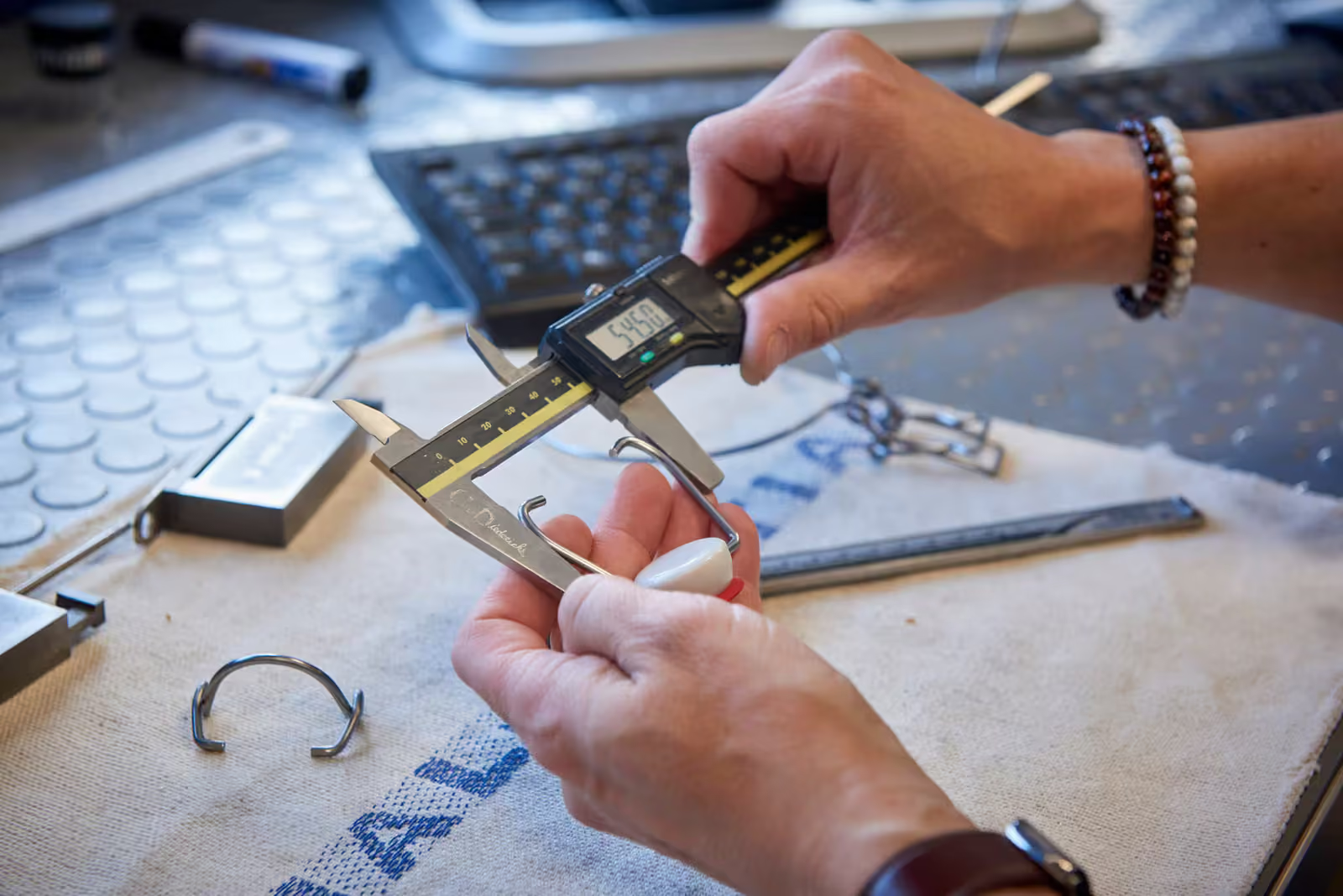
If your supplier asks you for "the neck diameter", specify which dimension you are giving them. The inside diameter of the opening, the outer diameter at the top of the neck and the one measured under the lip describe three different places. Ideally, send the drawing or a photo with dimensions that shows the measurement area.
How do you choose a replacement swing-top stopper for the neck of an existing bottle?
Find the reference of the bottle and of the original stopper
Start with the references shown on your purchase documents or on the distributor's data sheet. If you have kept the original stopper, send its reference or send the stopper and the bottle together to the supplier.
They can compare the shape of the bail, the position of the head and the contact of the gasket on the bottle. If you change glassmaker or stopper supplier, check the combination again on samples.
The same stopper reference can suit several bottles. The bottle reference and the neck geometry are therefore better ordering references than a description such as "stopper for a lemonade bottle".
Determine whether only the gasket or the whole mechanism needs to be replaced
If the lever locks normally and the gasket is hardened, cracked or deformed, first look for a replacement gasket compatible with the head. If the bail is bent, if the head sits crooked or if the lever remains unstable, examine the whole mechanism and its anchoring. Also inspect the surface of the neck on which the gasket seats.
If the gasket is injected onto the head, ask the supplier which part is intended for replacement.
How do you validate the seal of the bottle and stopper pair in real conditions?
Check the assembly on several bottles
Before placing a bulk order, test the stopper on several bottles, if possible from different batches. Open and close each sample to check that the movement remains smooth and that the stopper returns to its position.
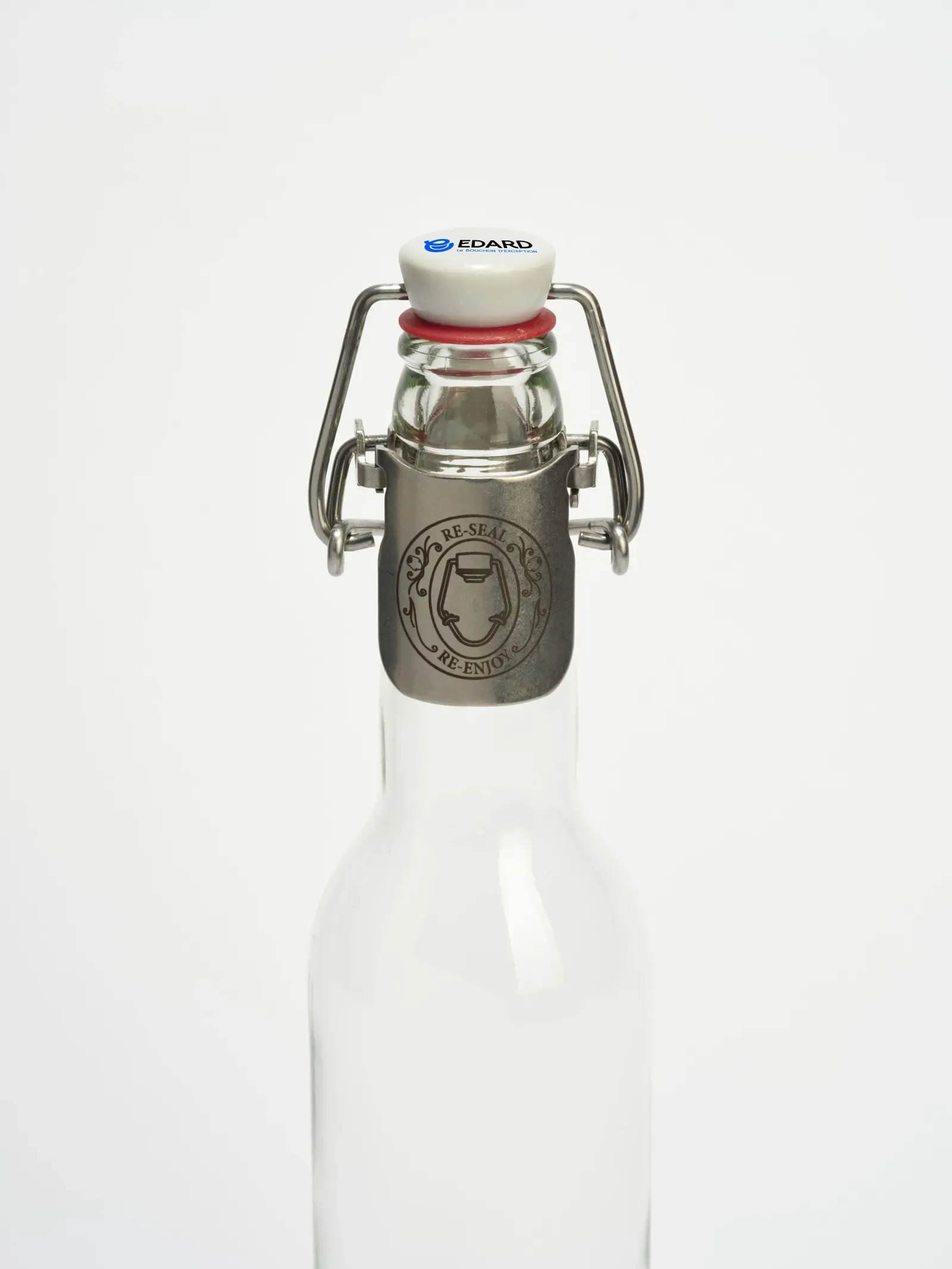
- The bail stays symmetrical and its prongs are correctly engaged, or the retaining ring stays stable.
- The head is centered and the gasket sits flat on the neck, with no pinching or offset.
- The lever stays locked once folded down.
- The closing force is consistent from one bottle to the next. A lever that is almost free may indicate insufficient compression. A very stiff lever may indicate excessive tension.
If fitting is automated, complete the manual test with a test on the line at the planned speed. Check that the mechanism positions and locks repeatably despite the dimensional variations of the glass.
Adapt the tests to the drink, to pasteurization and to reuse
For a beer, a lemonade, a kombucha or another sparkling drink, check the bottle's resistance to internal pressure and the tightness of the stopper once fitted on this reference.
Tell the glassmaker and the closure supplier the planned carbonation and the temperatures the packaging will be subjected to. In the case of pasteurization, ask for the limits that apply to the planned treatment. Some bottle data sheets indicate an admissible carbonation level that varies according to thermal conditions.
For a deposit-return project, first check that the bottle is designed to be refilled. A data sheet for a lemonade bottle with a swing-top stopper states, for example, that the model is single-use despite its resealable closure. On bottles intended for reuse, check the condition of the gasket and how well the closure holds up after the planned washing and closing cycles.
What information should you provide to choose a swing-top stopper that fits your bottle neck?
For new packaging as well as for replacing an existing stopper, the bottle reference and the neck drawing make it possible to start the search. If a sample is available, include it with your request so that the fit and the gasket seating can be examined on the glass.
Also specify the elements that may change the choice of closure:
- The role of the stopper: primary closure during packaging or resealing after opening.
- The product and its filling conditions: type of drink, carbonation, temperature and any heat treatment.
- The fitting method: manual or automated, with the planned speed if you are working on a line.
- The reuse conditions: planned washing cycles and any need for spare parts.
Have you already selected your bottle? Send Edard its reference or the dimensioned drawing of the neck to identify the right closure and check the compatibility of the assembly before ordering.

Continuer la lecture

Mounted or injected bottle gasket: which to choose for a swing-top stopper?

Route du Rhum 2026: cette année, les entreprises du groupe STARD prennent le large pour une belle cause !
Contact our team