Mounted or injected bottle gasket: which to choose for a swing-top stopper?
What is the difference between a mounted bottle gasket and an injected gasket?
The mounted gasket
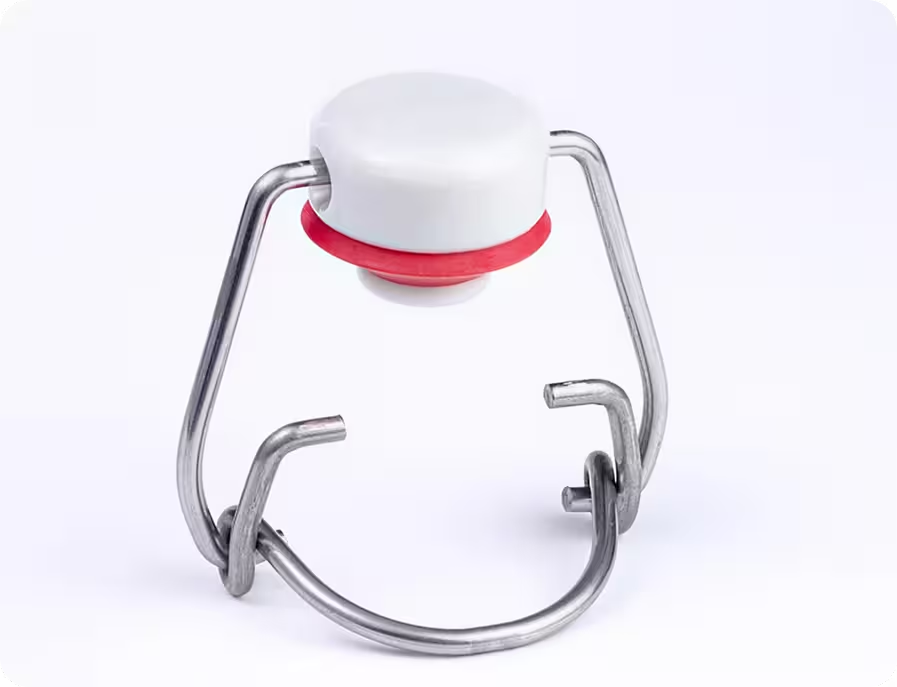
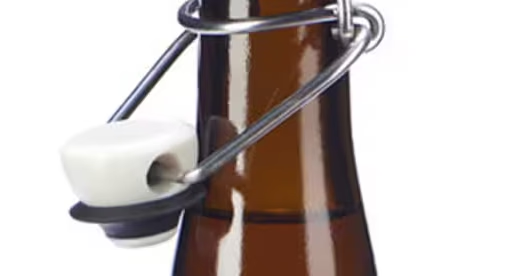
The mounted gasket is an elastomer washer (usually rubber) made separately, then fitted onto the head of the swing-top stopper. When you push the lever down, the washer presses against the rim of the bottle neck. It deforms under the closing force to make contact all the way around the opening.
If the washer is designed to be removed and a spare part is available, you can replace the gasket alone and keep the head and the wire frame. This is worth checking when choosing the reference, especially if you plan to collect and refill your bottles.
After each replacement, the washer must go back into position on the head and sit flat on the bottle neck. Get the reference of the replacement gasket from the supplier so you can match the original specifications.
The injected gasket
The injected gasket, also called an overmolded gasket, is formed directly on the head of the stopper. The gasket and the head stay joined together when opening, closing and washing. This design means there is no separate washer to remove, store or put back in place.
This design changes how the stopper is maintained. If the gasket wears out, you will need to replace the head together with its gasket or the complete stopper, depending on the parts available.
For a fleet of reused bottles, ask which parts can be renewed and how they are removed. This will let you compare the two solutions based on the operations actually needed between two fillings.
Is an injected bottle gasket more airtight than a mounted gasket?
Sealing depends on how much the gasket is compressed against the neck
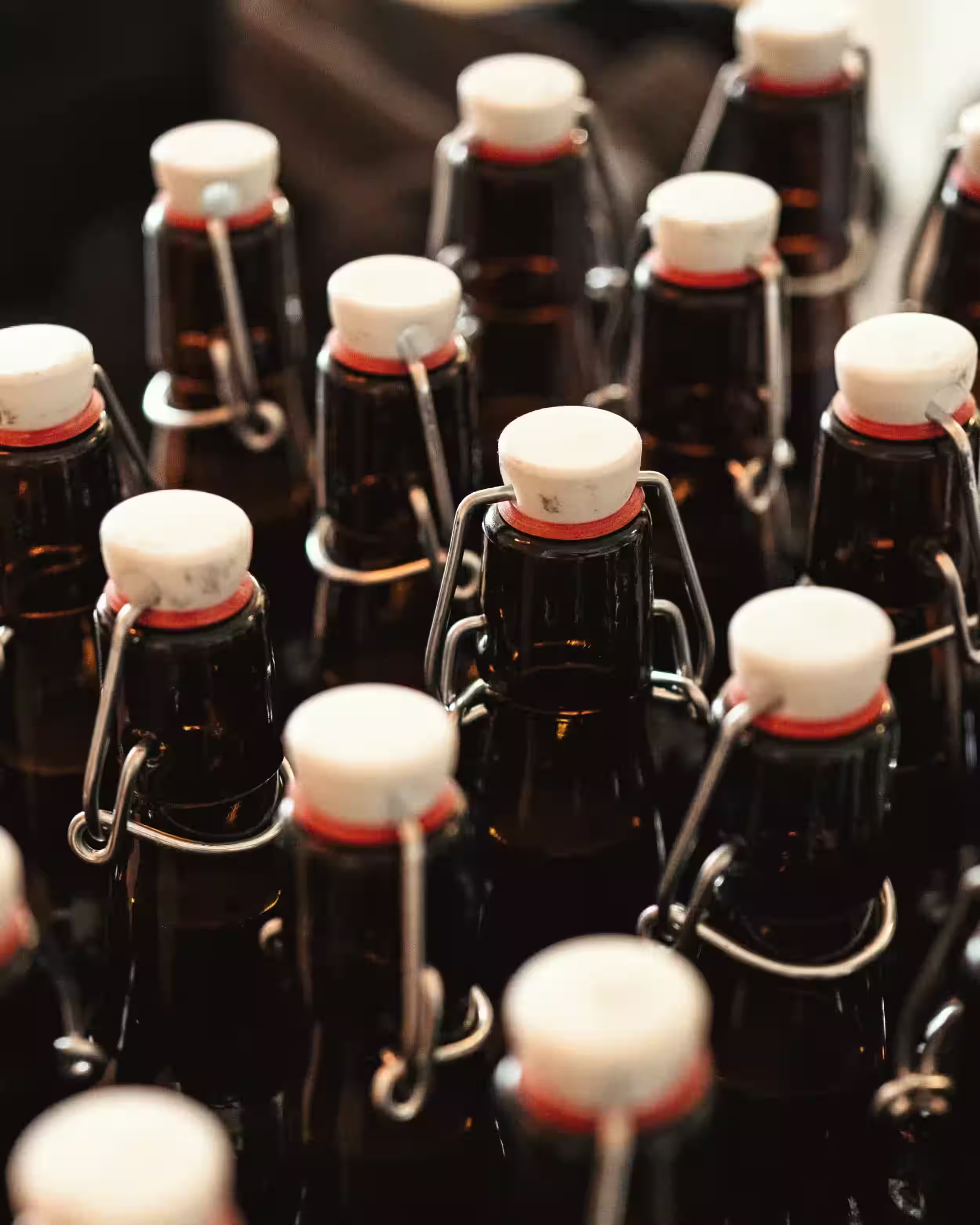
When you close a swing-top stopper, the bail presses the head against the bottle neck and compresses the gasket. For the closure to be airtight, contact must be continuous all around the rim of the bottle. A lever that clicks into place can give the impression that the stopper is properly closed, even though part of the gasket is under-compressed.
On a sample, four points let you check how well the stopper fits the bottle.
- The surface of the neck. Inspect the rim on which the gasket rests. A chip or defect on this surface can break the contact.
- The centering of the head. When you fold the stopper down, the head should naturally sit above the opening. If it arrives at an angle, the gasket may be more compressed on one side than the other.
- The thickness of the gasket. A gasket that is too thin or already flattened can let liquid or gas through. A gasket that is too thick can make closing difficult or get pinched.
- The tension of the bail. The geometry of the mechanism must hold the head in the right position once the lever is down. A bail that is deformed or poorly suited to the neck can change the force applied to the gasket.
These checks apply to a mounted gasket as well as an injected gasket. If you change bottles while keeping the same stopper, repeat them on the new neck. Two necks that look similar can position the head differently once the mechanism is closed.
Overmolding keeps the gasket in place on the head
The advantage of overmolding lies in the stability of the gasket on the head. With a mounted washer, a shift or a pinch can appear if the part was poorly fitted or poorly put back after washing. With an injected gasket, the washer stays joined to the head. In both cases, the head must come down in line with the neck and the gasket must be sufficiently compressed.
For still water, juice or syrup, choose tests that are representative of how the bottle will be filled, stored and transported.
For beer, lemonade, kombucha or another carbonated drink, also check how well the bottle-and-stopper assembly holds pressure under the intended service conditions. A closure may seem liquid-tight and still let gas escape over the course of storage.
If you are torn between two references, compare them on the same bottle model, under similar conditions. The result will tell you about the closure you will use in production.
How do washing and reuse affect the sealing of the gasket?
Spotting a worn gasket that no longer returns to its shape
Each time the bottle is closed, the gasket is compressed against the neck. When you open the bottle, it must regain enough of its shape to conform to the rim again on the next cycle. Over time, an elastomer can retain a deformation after compression. A gasket can therefore be well centered and still have a permanent dent where it rests on the glass. This phenomenon can affect both options.
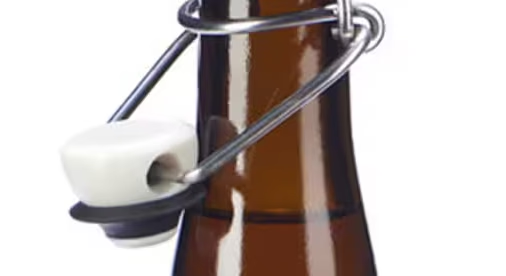
When inspecting reused bottles, look in particular for:
- A crack or a tear. Especially on the area in contact with the neck.
- A permanently flattened gasket. One whose shape stays marked after opening.
- A leak. Even when the head seems well centered.
- A loss of carbonation that warrants checking the gasket. The neck and the adjustment of the mechanism.
If a leak recurs after a washer has been replaced, inspect the sealing surface of the neck and the bail. A new washer can solve a wear problem, whereas misalignment requires readjusting the fit between the stopper and the bottle.
Plan for washing and replacement when choosing the stopper
With a removable gasket, you can arrange for the washer and the head to be washed separately if your protocol allows it. This requires planning for removal, refitting and checking the assembly. For deposit bottles, this solution is particularly attractive if replacing the washer fits easily into the sorting of returned bottles.
With an injected gasket, the gasket stays on the head during washing. Check that the protocol allows the surfaces concerned to be cleaned and that the closure keeps its seal over successive cycles.
To compare the two options, reproduce the conditions of your actual loop, notably the temperature, the cleaning products and the handling between the return of the bottles and their filling.
A test on new stoppers, followed by another after representative cycles, lets you assess how the closure behaves in use.
When should you choose a mounted or an injected bottle gasket?
The table summarizes the choice according to the operation that matters most for your project. If you bottle a carbonated drink in a deposit bottle, combine the criteria. Validate pressure resistance first, then compare washing and maintenance for the configurations that suit your bottle.
| Your situation | Configuration to consider | Point to check |
|---|---|---|
| You want to replace the gasket alone when it is worn. | Removable mounted gasket | The washer with the right reference is available as a spare part. |
| You plan to wash the head and the washer separately. | Removable mounted gasket | Removal, washing and refitting fit into your loop. |
| You want to wash the stoppers without handling separate washers. | Injected gasket | The washing process suits the assembled closure, and the head or the stopper can be replaced when worn. |
| You bottle a carbonated drink. | Both, depending on test results | The bottle-and-stopper assembly holds pressure under the intended conditions. |
For a small batch of reused bottles that are checked one by one, having spare washers can simplify maintenance.
In a loop where every disassembly adds an operation to be repeated on many bottles, the injected gasket can make handling easier.
To decide between the two solutions, compare the cost and the time spent per reuse cycle, taking into account the parts you will actually have to replace.
What should you check before ordering a swing-top stopper for your bottle?
Ask for samples suited to the neck you will use in production. A photo can present the project, but the bottle reference or the dimensioned drawing of the neck gives the manufacturer the information needed to adjust the closure.
Also specify whether the swing-top stopper must provide the initial closure of the bottle or be used to reclose it after opening. Édard notably offers a primary closure for bottles with holes and a reclosing solution for standard-neck bottles.
Before requesting a quote or approving samples, gather the following information.
- The bottle. Its reference, the neck drawing if you have it, and how the stopper is attached.
- The drink. Its nature, its alcohol content where applicable and, for a carbonated drink, the service pressure to take into account.
- The packaging. The filling temperature and the intended storage and transport conditions.
- Reuse. The washing protocol, the target number of cycles and how bottles are inspected on return.
- Spare parts. The availability of the washer for a removable mounted gasket, or of the head with its gasket and the complete stopper for an injected gasket.
- Food contact. The supplier's documentation for the proposed reference, with the conditions of use it covers. Provide the type of drink, the expected contact time and temperature, and whether the use is repeated, where applicable.
Once you have received the samples, start by checking the centering of the head and the consistency of the closure on several bottles. Then continue with the sealing tests that match your drink and its packaging.
For a reused bottle, repeat the check after washing and reclosing. You will then be able to choose a closure that suits the neck, the product and the operations planned between two fillings.
Not sure whether to choose a mounted or an injected gasket? Send Édard your bottle reference, the type of drink and your reuse conditions. The team will help you identify the stopper configurations to test on your neck.

Continuer la lecture
Which swing-top stopper should you choose for your bottle neck?


Route du Rhum 2026: cette année, les entreprises du groupe STARD prennent le large pour une belle cause !
Contact our team