Understanding the Glass Recycling Process
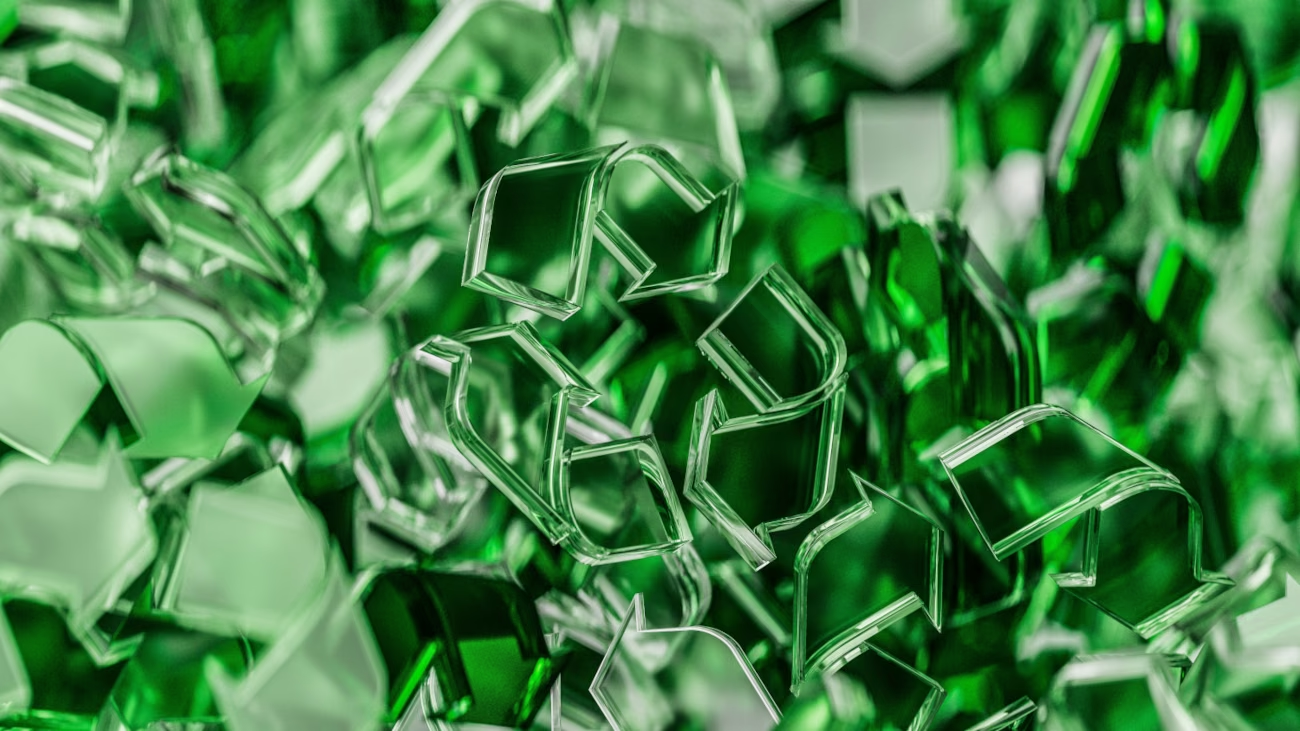
A bottle placed in a glass bin can become the raw material for a new package. Before it returns to store shelves, however, it goes through several operations: collection, sorting, cullet preparation, melting and forming. Each one helps produce a material that meets glassworks' requirements.
What Are the Steps in the Glass Recycling Process?
Recycling turns used packaging into secondary raw material, then into new containers. The equipment and the exact order of operations vary from one facility to another, but the journey relies on several essential functions.
INSERT RECYCLING CYCLE DIAGRAM HERE
Collecting bottles and jars
The cycle begins when packaging is placed in dedicated bins. Depending on local arrangements, collection takes place through drop-off points or a pick-up service. The glass is then consolidated and transported to a specialized processing facility.
The quality of this collection plays a decisive role. A bottle mixed with porcelain or construction waste requires more separation before it can be recovered. Sorting at home therefore serves to recover material as much as to preserve its quality.
Sorting and removing unwanted materials
When it arrives, the glass undergoes checks and various separation operations. The aim is to remove items that would compromise cullet preparation or remelting.
Several techniques complement one another:
- Manual sorting removes certain bulky objects and visible contaminants.
- Magnetic separation extracts ferrous metals.
- Eddy currents make it possible to separate non-ferrous metals, such as aluminum.
- Optical sorting identifies unwanted fragments and can help separate colors.
These processes target different materials. Fragments of ceramic, stone or porcelain are among the contaminants to be removed, as they can remain as inclusions and cause defects in new packaging.
Crushing and preparing the cullet
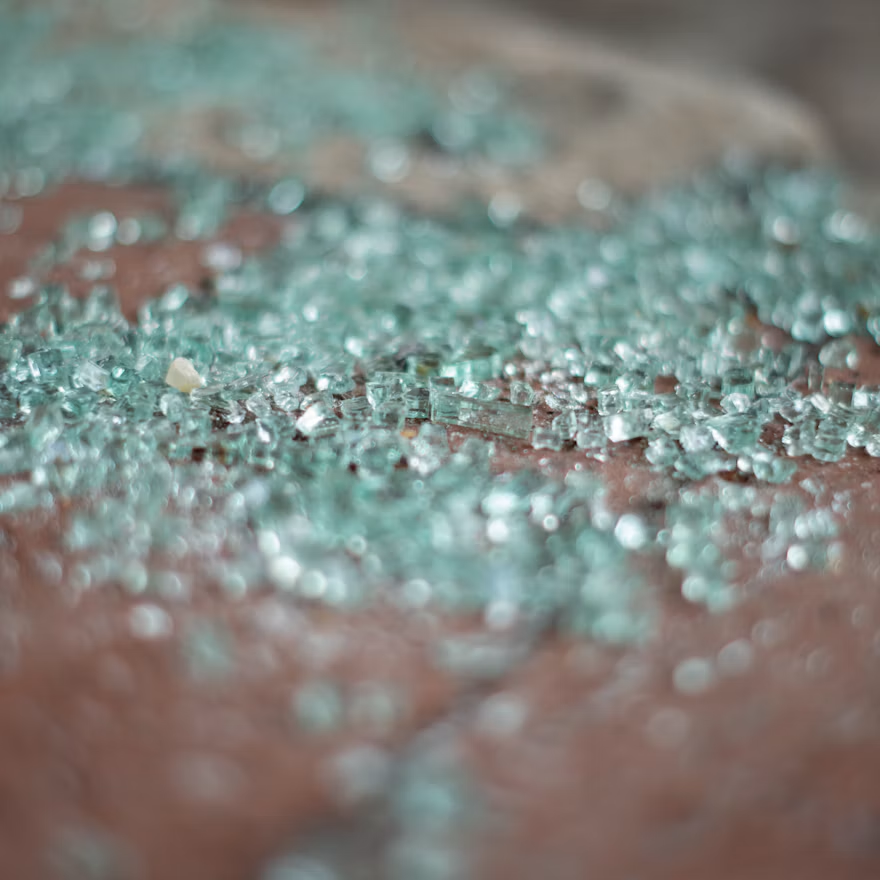
The glass is broken into fragments, then prepared to meet glassworks' specifications. Depending on the processing line, crushing, screening, separation and dust removal take place at different stages. Sizing also makes it possible to control the size of the fragments.
The desired result is a cullet that is sufficiently clean, uniform and suited to the product to be made. It is therefore not simply a matter of breaking bottles: preparation must also control contaminants and mixtures of composition or color.
INSERT CULLET CALLOUT BOX HERE
Melting the cullet in a glass furnace
The cullet is sent to the glassworks and then incorporated into the glass composition. Depending on production needs, it is combined with raw materials such as silica sand, sodium carbonate and limestone.
The mixture is heated to a high temperature in a glass furnace. The material melts, becomes homogeneous and undergoes a refining stage intended in particular to limit bubbles. The composition and operating conditions are adjusted to the type of glass required.
Adding cullet reduces the amount of virgin raw materials needed. It also lowers energy requirements compared with equivalent production based solely on those raw materials.
Forming and inspecting the new packaging
The molten glass is delivered in portions suited to the containers to be produced, then shaped in molds. Depending on the process, forming combines different pressing and blowing operations.
The bottles and jars then go through annealing: their cooling is controlled to reduce internal stresses. Inspections cover in particular the geometry and any defects that could compromise the use of the container. Compliant packaging can then join the filling lines.
TABLE TO BE INSERTED USING FILE 01-TABLEAU-ETAPES.HTML.
Which Containers Can Enter the Glass Recycling Process?
The transparency or color of an object is not enough to determine where it should go. First you need to identify what it is: packaging, tableware, window glass or technical glass. Recycling streams are not designed to accept all of these categories indiscriminately.
Clear and colored glass packaging
Bottles and jars made of container glass can go into the dedicated collection, whether they are clear, green, brown or other shades compatible with the stream. Through-body coloring therefore does not, on its own, prevent recycling.
Color nevertheless remains a manufacturing characteristic that needs to be managed. A mix of colored glass cannot be used to directly produce perfectly clear glass. Processors may use color separation to supply cullet suited to glassworks' needs.
The specifics of opaque, lacquered or decorated glass
A tinted package that lets light through and a fully opaque package do not necessarily behave the same way during sorting. Some optical equipment identifies fragments by the light that passes through them. Significant opacity can then lead to glass being mistaken for unwanted materials.
This does not mean that all opaque packaging is impossible to recycle. Additional treatments make it possible, in particular, to finely crush certain rejected fractions to obtain glass sand that can be reincorporated into the melt. Whether they are accepted depends on the facilities and the characteristics of the packaging.
For a lacquered, metallized or heavily decorated container, you need to examine the surface treatment and its effect on sorting. Recyclability is assessed on the complete package: the mere fact that it is made of glass is not enough to guarantee it.
Items to send to another stream
Drinking glasses, baking dishes, crystal, window panes and mirrors must not be treated like bottles and jars. Their compositions, properties or treatments may be incompatible with the requirements of packaging recycling.
Porcelain, earthenware and ceramics must also be excluded from this stream. Their appearance, which can sometimes resemble that of an opaque container, does not change what they are.
However, being excluded from the glass bin does not mean recycling is impossible altogether. Window glass, for example, has its own dedicated channels. The guidelines of the local authority or service provider remain the reference for directing each item.
TABLE TO BE INSERTED USING FILE 02-TABLEAU-TYPES-VERRE.HTML.
Why Does Sorting Determine the Glass Recycling Process?
Industrial processing can remove many unwanted items, but it does not replace proper sorting upstream. The more closely the collected stream matches the expected materials, the easier it is to prepare it for new production.
Empty containers thoroughly and separate removable parts
Packaging must be thoroughly emptied before being deposited. It is generally not necessary to wash or rinse it: small residues are dealt with during processing. Ordinary labels can also be left in place.
A few simple steps help prepare containers:
- Place packaging in the bin loose, without a bag.
- Remove easily detachable caps and lids, in line with local guidelines.
- Send these items to their respective streams.
- Keep out tableware, ceramics and technical glass.
Parts attached to the container that are difficult to remove require following the guideline set for that package. Consumers do not have to carry out industrial separation operations themselves.
Preserve cullet quality and control color mixes
Glassworks look for material that meets precise specifications. Contaminants can cause defects, while a poorly controlled mix of colors limits the possibilities for making clear glass.
Color separation can take place at the processing center, even when consumers place packaging in a shared bin. It makes it possible to direct the recovered fractions to suitable uses.
For packaging manufacturers, these constraints are a reason to consider end of life from the design stage: color, opacity, decoration and associated components all influence how easily the packaging is sorted and the quality of the recovered material.
What Are the Benefits and Limitations of the Glass Recycling Process?
Recycling keeps material in the production loop. Its benefits nevertheless depend on effective collection, appropriate processing and an outlet for the resulting cullet.
Saving raw materials and reducing energy needs
Using cullet limits the use of the mineral resources needed to make glass. It also reduces the furnace's energy needs and part of the emissions associated with processing raw materials.
Container glass can be recycled repeatedly with no intrinsic loss of quality, provided its composition is controlled and it is properly processed. This property does not mean that all packaging is collected, nor that all recovered fractions automatically go back into a furnace.
Recycling also still consumes energy and involves transport. It complements efforts to reduce material use and to reuse packaging, without replacing them.
Distinguishing recycling, reuse and deposit-return schemes
Recycling involves destroying the container and remelting its material. Reuse, by contrast, preserves the container: after being returned, washed and inspected, it can be used again for the same purpose when it has been designed for this and integrated into a suitable system.
A deposit-return scheme is a return mechanism based on a refundable deposit. Depending on the system, it can support either reuse or recycling. It therefore does not, on its own, describe the treatment the packaging undergoes.
TABLE TO BE INSERTED USING FILE 03-TABLEAU-RECYCLAGE-REEMPLOI.HTML.
The quality of the glass recycling process relies on continuity: collecting well, preparing suitable cullet and controlling its transformation. For packaging professionals, thinking about the container's composition and its closure elements from the design stage helps anticipate this end of life.

Vous souhaitez discuter de votre projet

Continuer la lecture

Verres soufflés, histoire et techniques d'un savoir-faire millénaire
Contact our team