Why use a swing top closure in 2026?
The choice of closure system is a key factor in the design of a bottled product.
Far beyond its primary function, it influences preservation, user experience, and brand perception.
The swing-top stopper, also known as a mechanical stopper, is now establishing itself as a comprehensive solution, addressing technical, environmental, and marketing challenges.
Why use a swing-top stopper? Edard's 10 good reasons
1) Reliable sealing to preserve product quality
The swing-top stopper relies on a gasket compression system that ensures an airtight seal.
This configuration limits air exchange and effectively protects the contents against oxidation. It is particularly suitable for carbonated beverages, where maintaining internal pressure is essential.
This airtight seal directly contributes to the product's long-term stability.
2) A resealable solution adapted to modern uses
Unlike single-use caps, the mechanical stopper allows for repeated opening and closing without compromising its performance.
This feature addresses new consumption patterns, where products are not always consumed in a single sitting. Users thus benefit from greater flexibility without compromising preservation.
3) A strong driver for reuse
The mechanical stopper fully aligns with a sustainability approach. Its robustness allows for multiple use cycles, in line with deposit-return schemes and bottle reuse.
This positioning is particularly relevant in a context where environmental concerns increasingly influence the choices of brands and consumers.
4) A distinctive user experience
Opening a mechanical stopper is an identifiable and rewarding gesture. The characteristic sound, ease of use, and the ability to easily reclose it contribute to a complete sensory experience.
This type of interaction strengthens the bond between the product and its user, creating a distinctive moment.
5) A direct impact on brand perception
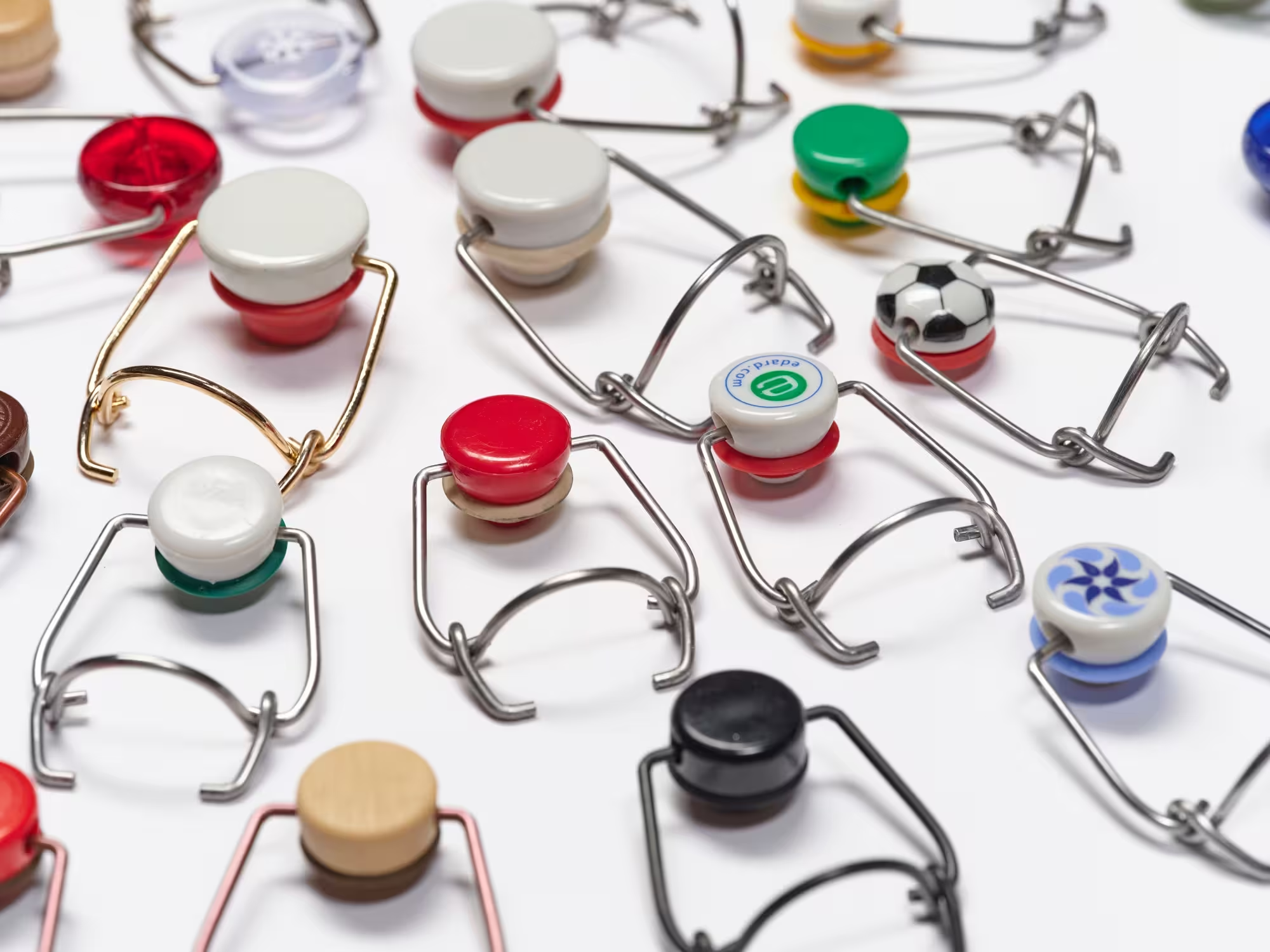
The mechanical stopper helps to position a product in a premium segment. Its visible and structuring design attracts attention on shelves and conveys an image of care and precision.
It is often associated with artisanal, premium, or authentic products, thereby strengthening the brand's credibility and differentiation.

6) A versatile solution for many sectors
The mechanical stopper is suitable for a wide range of applications.
It is used in the beverage industry (beers, lemonades, and juices) but also in other sectors such as:
- Oils,
- Vinegars,
- Some cosmetic products.
This versatility enables brands to standardize their approach while maintaining a high level of performance.
7) Proven mechanical reliability
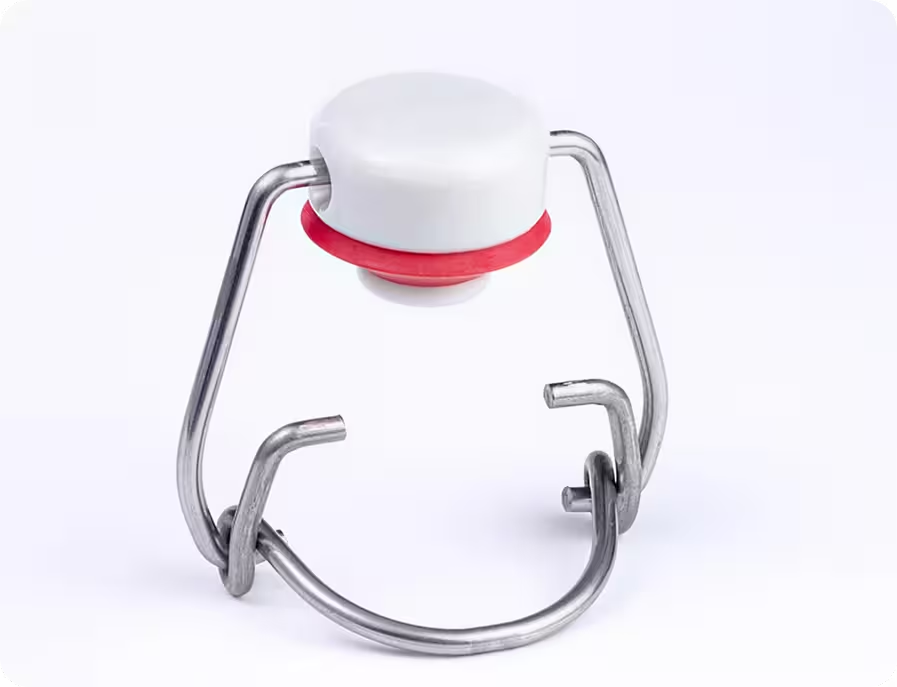
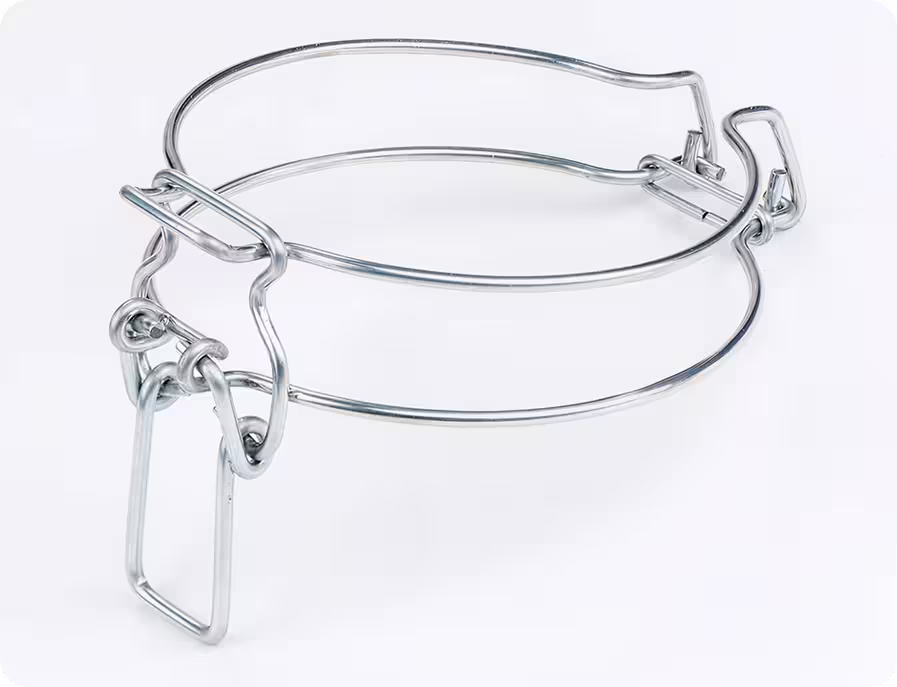
The mechanical stopper's design relies on robust components: a metal frame, a closure head, and a sealing gasket.
This assembly ensures high resistance to operational stresses, particularly during transport or storage. When correctly paired with a suitable bottle, it offers a high level of security.
8) Possible integration into automated lines
Contrary to some common misconceptions, the mechanical stopper is compatible with industrial processes.
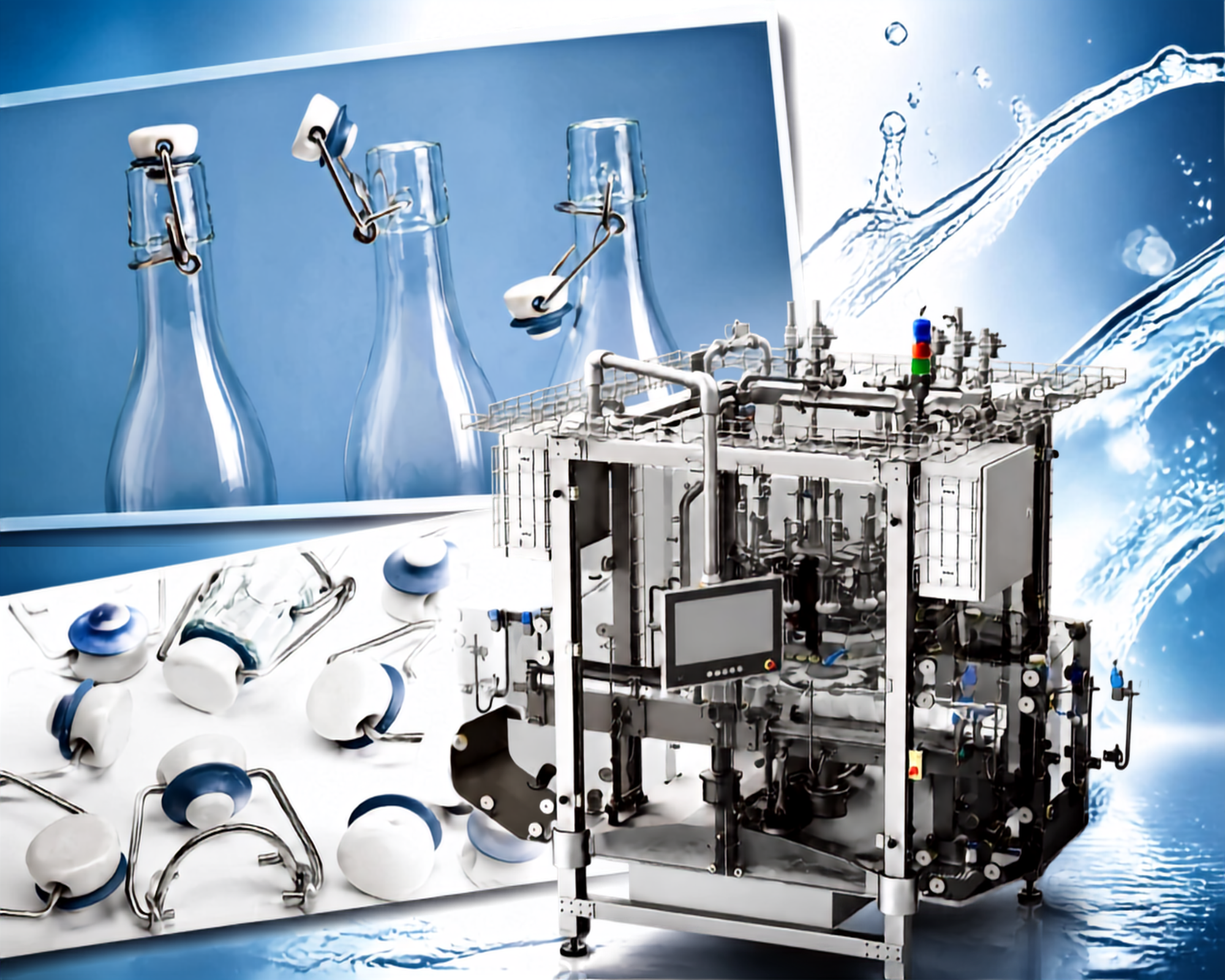
Specialized capping machines ensure quick and consistent application, suitable for large volumes.
This integration capability facilitates its adoption by industrial players seeking reliable and reproducible solutions.
9) A differentiation tool at the point of sale
Packaging plays a key role in the purchasing decision. The swing top stopper, with its shape and operation, immediately stands out from more standard solutions.
It captures attention and helps make the product memorable, which can encourage its selection on the shelf.
10) Overall consistency between container and closure
The swing-top stopper truly comes into its own when designed in conjunction with the bottle.
This system approach optimizes compatibility, sealing performance, and overall ergonomics. Together, they form a cohesive solution, where each element contributes to the product's final quality.

Why use an Edard swing-top stopper?
Choosing a swing top stopper is more than just selecting a component. This involves integrating a complete solution, aligned with production constraints, product requirements, and brand objectives.
With its expertise, Edard assists professionals in designing and optimizing their closure systems. From material selection to in-line integration, each project is approached with a tailored strategy, ensuring performance, reliability, and consistency.
Partnering with Edard means choosing a partner capable of transforming a technical component into a true value driver for your product. Contact us to design the closure that will revolutionize your beverage.

Vous souhaitez discuter de votre projet

Continuer la lecture

Déchets de verre : comment les trier, les recycler et les valoriser ?
Contact our team